Protecting Play.
Empowering Parents.
Quest Guardian protects kids from online predators in gaming — without turning parents into spies. Decentralised AI that never sends your child's data to the cloud.
Gaming platforms create environments of false intimacy — teammates become "friends," then confidants, then something worse. Traditional parental controls weren't built for this.
Content filters block explicit material. Parental controls limit screen time. Platform moderation reacts after reports. None of them detect a predator building trust with your child over weeks. That's what Quest Guardian is built for.
Want to see how predators actually operate inside Roblox and Minecraft? Ethical hacker and child safety advocate Ryan Montgomery documents it firsthand.
Four steps between your child's game and you getting an alert. Every step is encrypted, decentralised, and designed so our servers never see your child's data.
This is what Quest Guardian Home actually looks like — clear alerts, device status at a glance, and zero noise.
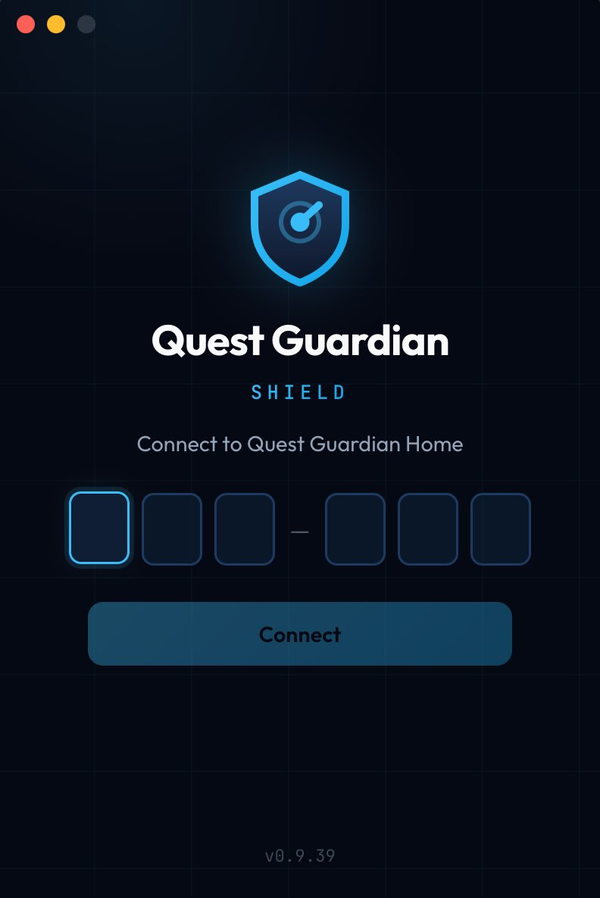
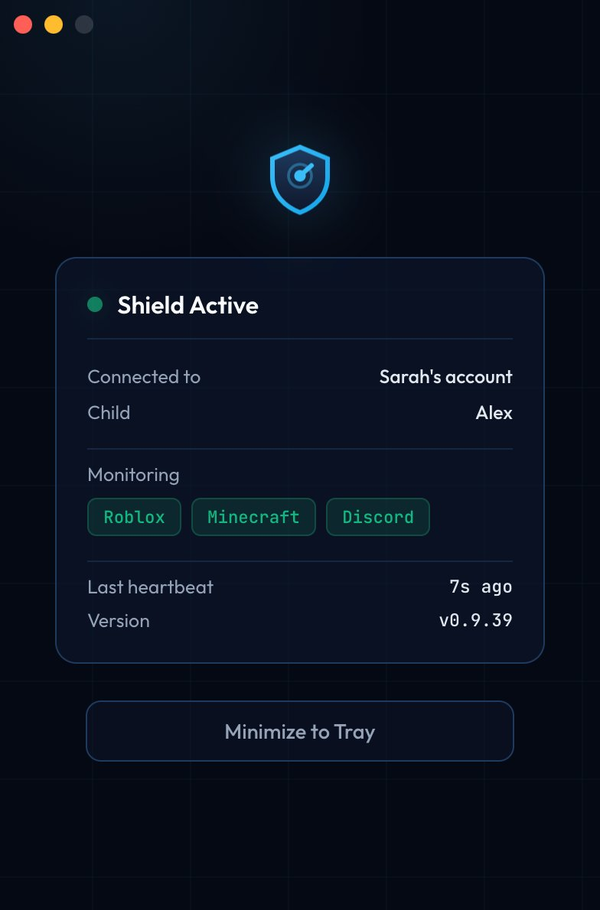
A lightweight desktop app that runs quietly on your child's computer. Pair it with your account in seconds — no technical setup required.
Enter the pairing code from your dashboard to connect Shield to your account.
Shield monitors gaming platforms automatically. Parents see alerts in real time.
This isn't a pinky promise — it's how the system is built. Other tools route your child's messages through their cloud. We can't do that even if we wanted to.
Your child isn't browsing websites — they're in Roblox lobbies, Minecraft servers, and Discord voice chats. That's where we watch. Traditional parental controls don't even look there.
Most parental controls flag swearing, screen time, and gaming violence — and you learn to ignore them. That's dangerous. Quest Guardian is built around confidence, not concern: we only watch for the things that actually put children in danger.
This is a feature, not a limitation. Fewer false alarms means every alert matters.
Quest Guardian adapts automatically as children age — because a 7-year-old and a 15-year-old need different levels of oversight.
Parents can adjust these defaults at any time. Trust Mode coming in a future release.
Designed to meet GDPR, COPPA, and EU Cyber Resilience Act requirements from the ground up — not bolted on after launch. Read our compliance documentation →
Every tier includes the same privacy architecture. Free accounts get full protection for one child — no privacy compromises at any level. Pricing details will be announced at public beta launch.
Integrate child safety detection into your platform with our REST API. Same privacy architecture, your application.
No — spy apps show you everything your child does. We only alert you to potential threats. Most days you'll hear nothing, because nothing bad happened. We detect predators, not your kid's conversations with friends. There's no keystroke logging, no screenshot gallery, no browsing history. Just safety alerts when they matter.
That's great — and you should trust them. This isn't about trusting your kid. It's about protecting them from sophisticated adults who manipulate children for a living. Groomers are professionals. They target the most trusting kids. Quest Guardian is a safety net, not a trust violation.
Maybe, if they really want to. But Quest Guardian isn't about catching your kid — it's about catching predators. Even if your child disables it temporarily, you'll be alerted. And predators who try to get kids to disable protection? That's a detection signal itself. We also recommend talking to your child about why Shield is there — research shows kids who know about safety tools are more likely to report concerning contacts.
Absolutely, and platforms are trying. But they have millions of users and can only react after reports. We provide an additional layer of protection in your home, specific to your child. Think of it like a home security system — the police exist, but you still lock your doors.
Shield splits your child's data into two separate paths. Raw content is encrypted with your personal key and stored as evidence only you can read. Separately, anonymised safety signals — not actual messages — are analysed by the AI network for threats. Evidence is stored encrypted for 24 hours to 30 days depending on your plan, then automatically deleted. If we shut down tomorrow, there's no data to lose — that's the benefit of privacy-first architecture.
Three key differences. First, privacy: they store your child's data on their cloud servers — we don't. Your data never sits in a corporate database. Second, focus: we're built specifically for gaming threats, not general web monitoring. Our AI understands gaming context, not just keywords. Third, detection: we use multi-stage AI that detects behavioral patterns like grooming escalation, not just flagged words.